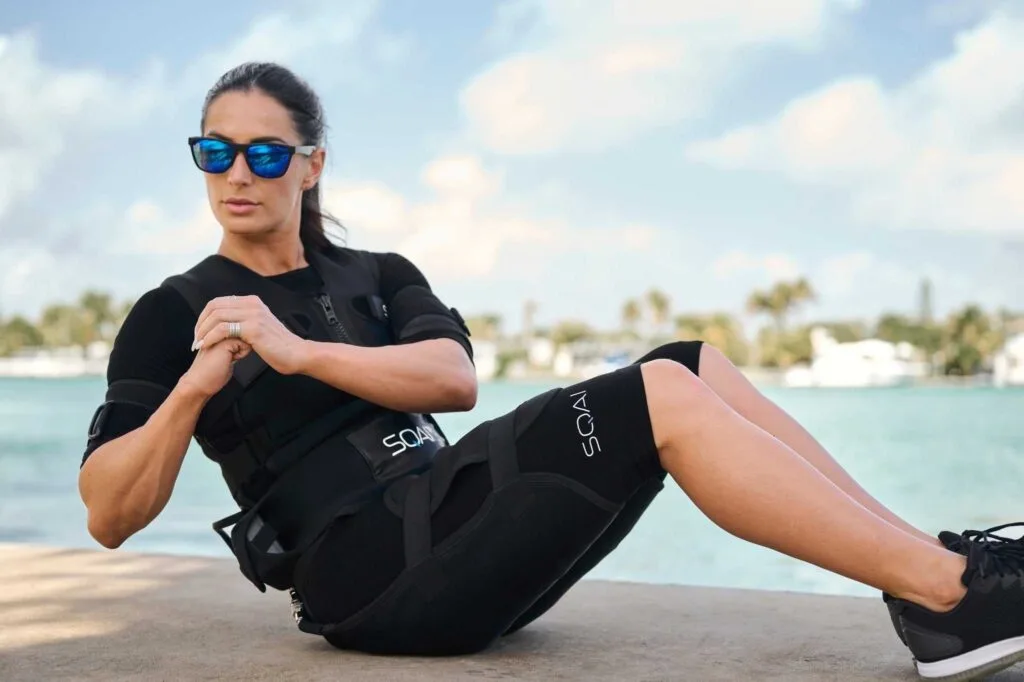
Electrode placement is the difference between a muscle working and a patch of skin complaining. The current takes the easiest path it is given. Put the contact in the wrong place and you feel a sting, a twitch in the wrong spot, or nothing useful.
The rule that beats every diagram
Use the map that shipped with your suit or your pad set. A magazine diagram, including the simple figure on this page, is a teaching sketch. It is not a prescription. Suits differ. If the manual and this article disagree, the manual wins.
On a full suit, panels usually sit over the large muscles you would expect: chest and upper back or shoulders, the middle of the trunk, the hips and glutes, and the front and back of the thighs. Arms show up on some suits and not on others. The sketch below is that idea, drawn loosely.
A front-view sketch
The figure in the header marks five zones people ask about: the fronts of the shoulders, the trunk, and the fronts of the thighs. Those dots are not coordinates. They are a reminder that contact belongs on the muscle belly, not on a joint and not on the neck.
Do not run a DIY path from shoulder to shoulder across the chest because a video made it look efficient. Do not park a pad on the front of the neck. Do not cover a cut, a rash, or skin you cannot feel normally.
Wet pads, dry panels, studio suits
Wet electrodes need moisture to make contact. If they are half dry, one edge bites and the rest of the pad does little. Dry panels, as on TitanBody, OHM, and VisionBody in our comparison, skip the bottle and still need the suit to sit flat. A fold is a hot spot.
miha bodytec does this in a studio, with a trainer. That does not make placement a mystery. It means someone else is responsible for it during the session. You should still know what “stop” feels like.
During the session
Raise intensity until the muscle is clearly contracting and you can still breathe and speak. A burn in the skin is a contact problem. A deep ache in the muscle the next day can be the session. Those are different, and only one of them means you should have kept going.
People with a pacemaker or other implanted electrical device, people who are pregnant, and people with epilepsy or a heart condition should get personal medical advice before any of this. We review what suits cost to own. We do not clear you to train.
Related: EMS vests, and the 2026 ranking.
FAQ
Where should electrodes not go?
Not on the front or sides of the neck, not across the chest by improvising a path, not on broken or numb skin, and not over a recent incision. Follow the suit map. This is general information, not a personal placement plan.
Do dry suits use the same map as sticky pads?
The muscle targets can be similar. The hardware is not. A dry suit fixes the panels in the garment. Sticky pads you can slide. Either way, the manual for that product is the map to use.
What if one side twitches harder?
Stop and check contact before you turn the intensity up. Uneven contact is common with a poor fit, dry skin under a wet pad, or a panel that has folded. If it keeps happening, use the brand's support notes rather than forcing the session.